

With approximately 4 million specimens, the collection of fossil invertebrates is the largest within the paleontological collections of Naturalis. Invertebrates are animals without a backbone. Among these fossils, beautifully preserved crinoids, crustaceans, trilobites, brachiopods, and ammonites can be found. Additionally, there are ichnofossils: trace fossils that provide insights into the behavior of the animals that created them. Examples of these include footprints, gnawing marks, and burrows.
Highlights
The invertebrate collection of Naturalis includes an impressive collection of fossils from invertebrate animals. This remarkable collection provides insight into the evolution and diversity of invertebrate animal groups over time, from the earliest life forms to the more complex organisms of later periods.
Burgess Shalefossils
The Cambrian Explosion is a remarkable period in the history of life, during which a vast diversity of animal species, particularly invertebrates, emerged. From animals with external armor to those with a notochord (the precursor to the backbone), fossils from the Cambrian period provide a blueprint for the animal species that we still know today.
The Burgess Shale is a geological formation from the Cambrian period, located in the Canadian part of the Rocky Mountains. This formation is dated to be about 500 million years old and contains an immense number of invertebrate fossils. Naturalis holds a number of these exceptional fossils in its invertebrate collection.


Timorcollection
During the Permian (about 300 - 250 million years ago) and Triassic (about 250 - 200 million years ago) periods, there was a shallow sea in the area that is now the Indonesian island of Timor, which contained a highly diverse reef. The fossils representing this reef, such as corals, ammonites, and crinoids, have been exceptionally well-preserved and form a unique source of information for reconstructing the marine world of the Permian and Triassic periods.
Between 1910 and 1916, several expeditions were carried out from the Technical University of Delft to the Indonesian island of Timor. In 1937, another expedition was conducted - this time from the Geological Institute of the University of Amsterdam. These two collections have been combined, fully cataloged, and made accessible for research at Naturalis.

CenozoicMolluscs
Naturalis Biodiversity Center has one of the largest collections of Cenozoic molluscs (fossil mollusks 66 million years old or younger) in Europe, comprising approximately 450,000 samples and an estimated 5 million specimens. We probably have the largest Cenozoic mollusc collection from Indonesia in the world (ca. 32,000 samples, ca. 3,000 types), which includes the Karl Martin collection (1851-1942) and the Mijnwezen-Cosijn collection.
The largest part of the collection is the European subcollection (ca. 200,000 samples, ca. 800 types). This includes important sites such as Miste-Winterswijk and the surrounding area of Almere and Amsterdam, as well as Pliocene Belgium, Miocene Turkey, and Pliocene Iceland just to name a few.
In addition, there are some smaller subcollections from other parts of the world (ca. 30,000 samples, ca. 200 types), such as the Philippines, the archaeological site Ksar ‘Akil in Lebanon, Miocene molluscs from the Lake Pebas system (Amazon Basin) and the Netherlands Antilles."

Beach fossilcollection
Our beach fossil collection consists of approximately 26,000 samples of over 700 species of fossil mollusks from the Dutch beaches and estuaries with a stratigraphic origin from Holocene to Eocene. The collection has been formed in the last hundred years through the accumulation of mainly dozens of private collections and is in cultural-historical terms an important example of the emergence of professional-amateur research networks in the Netherlands. The collection is scientifically very valuable for taxonomy and knowledge about fossil faunas.

Micropaleontology
The smallest microfossils are preserved on microscope slides and in plastic slides. Naturalis has approximately 130.000 of these. The vast majority of the collection consists of foraminifera: single-celled organisms with an external calcium skeleton that fossilizes well. The collection also includes tiny (parts of) plants, as well as conodonts: an extinct group of small, vertebrate animals that lived in the sea. Some slides contain small fragments of larger fossils.

Holoplanktonic mollusccollection
The subcollection "Holoplanktonic molluscs" is the lifework of Naturalis researcher Arie W. Janssen (†2021). With about 11,000 specimens, including 1100 types, it is the largest and most important collection of its kind in the world.

Boreholecollection
The subcollection 'boreholes' consists largely of the collection of fossil molluscs of the former Dutch National Geological Service, supplemented by material from various other boreholes and geological and archaeological excavations. It reflects research done since the beginning of the 20th century on the fossil mollusc faunas in the subsurface of the Netherlands and the Dutch part of the North Sea. The material has served as the basis for several standard works and is a source for further research.
Whoworks with this


Projects
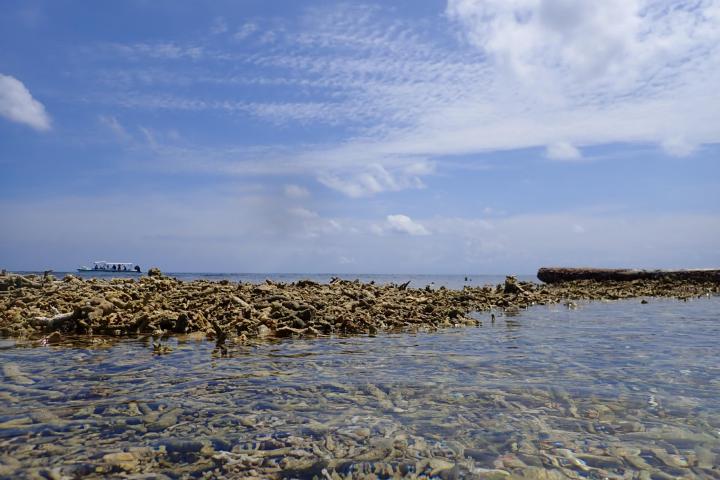
4D-REEF Research Programme
Importantpublications
Leloux, J., & Renema, W. (2007). Types and originals of fossil Porifera and Cnidaria of Indonesia in Naturalis. NNM Technical Bulletin, 10.
https://repository.naturalis.nl/pub/270361
Leloux, J. (2002). Type specimens of Maastrichtian fossils in the National Museum of Natural History, Leiden. NNM Technical Bulletin, 4, 1–40.
Moreinformation
Timor collection
https://bioportal.naturalis.nl/nl/highlights/timor-collection
Paleontological dataset of Naturalis
https://www.gbif.org/dataset/ea233ece-c4fb-4fb8-bf98-f16235c4144c